Christmas Truck with Tree
A Designer’s First Look: Charm, Clarity, and Craft Readiness
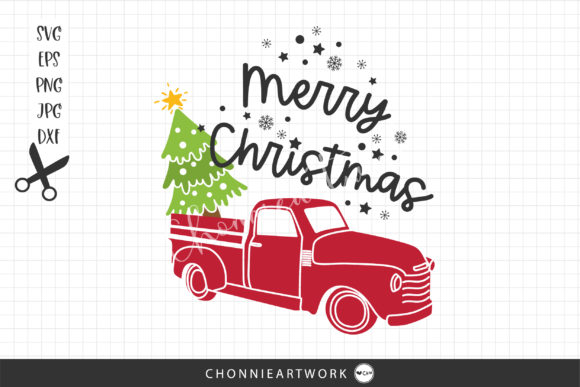
When I opened Christmas Truck with Tree for the first time—pulling it into my embroidery software—I didn’t just see a holiday graphic. I saw a potential tote bag centerpiece, a cozy sweatshirt motif for a local boutique, maybe even a soft embroidered patch for baby leggings. The illustration balances whimsy and structure: a cheerful vintage-style truck bed holding a full, slightly lopsided tree, simple wheels, subtle snowflakes, and clean outlines. It doesn’t lean too cartoonish or overly detailed—critical for embroidery translation. As an Illustrations asset meant for real-world making, its strength lies in how easily it invites stitching, not just screen viewing.
Where This Design Naturally Lands (and Why)
I recently used Christmas Truck with Tree to develop a limited-run holiday collection for a small shop in Portland—think organic cotton tote bags, heavyweight unisex sweatshirts, and linen tea towels. The design scaled beautifully across all three: crisp on the towel’s tight weave, bold but breathable on the sweatshirt’s fleece backing, and balanced on the tote’s medium-weight canvas. Its moderate width-to-height ratio avoids awkward stretching on curved surfaces like caps or pillow covers, and the tree’s silhouette holds up even at 3.5 inches tall—ideal for baby embroidery or apron pockets. As a Graphics file set (SVG, PNG, EPS, DXF), it gave me flexibility to trace, simplify, or adapt—but the original composition already felt stitch-ready.
Real Embroidery Behavior: What Holds Up, What Needs Care
Christmas Truck with Tree performs well as a machine embroidery design—but only when matched thoughtfully to fabric and application. On smooth, stable fabrics like twill, denim, or medium-weave linen? Excellent clarity. The wheel arches, tree branches, and cab details read cleanly in satin stitch and fill stitch without excessive density. On stretchy knits or thin rayon blends? I recommend light cutaway stabilizer and testing stitch tension first—the truck’s horizontal lines can blur if the fabric shifts mid-hooping.
Dark fabrics demand attention: the design’s open areas (like sky space around the tree) need careful thread color contrast. I tested it in forest green thread on charcoal sweatshirts—it read warmly, not muddy. But on black, I switched to cream for the tree trunk and red for the truck body to preserve legibility. For embroidered patch use, I added a tight running stitch border; the shape’s clean perimeter made that easy. Just avoid cramming it into hoops smaller than 4×4 inches—the rear axle and lower tree boughs lose definition below that.
Where Caution Is Wise
- Textured fabrics (terry cloth, bouclé, heavy corduroy): Reduce fill stitch density by 10–15% or convert parts to applique design for cleaner texture interaction.
- Curved surfaces (baseball caps, mugs via heat-transfer vinyl mockups): Test hoop placement early—the truck’s flat profile works better on front panels than rounded crowns.
- Frequent-wash items (baby onesies, kitchen towels): Use high-quality polyester thread and secure jump stitches. Avoid tiny decorative accents (e.g., tiny snowflake dots) unless they’re at least 1.2mm wide—they’ll fray over time.
- Commercial embroidery clients who value brand consistency: The design’s friendly, non-licensed aesthetic fits small-batch shops well—but verify your license permits resale of finished products before listing on Etsy or at craft fairs.
Design Impact Beyond the Stitch
This isn’t just about whether Christmas Truck with Tree sews cleanly—it’s about how it shapes perception. A customer buying a handmade tote with this motif isn’t just purchasing utility; they’re choosing warmth, nostalgia, and quiet craftsmanship. The design feels intentional—not generic clip art. That elevates perceived value, especially for personalized gift buyers who scroll past dozens of “Merry Christmas” fonts looking for something with personality. For Etsy sellers or small shop products, it adds cohesion: pair it with matching tea towel tags or printable mockups, and you’ve got a mini-holiday collection with built-in visual harmony.
It also builds trust. When the tree’s branches don’t vanish into dense fill, when the truck’s grille reads clearly on a 5-inch hoop, when the final finished product looks as polished in person as it did on-screen—that consistency tells customers you pay attention. That matters more than ever for craft business owners competing with mass-produced alternatives.
Practical Designer Notes Before You Stitch
- Test on scrap fabric first—especially if using textured or dark materials.
- Check thread color contrast in both natural and artificial light; some reds dull on navy.
- Review stitch density: If your machine flags high-density zones, simplify branches or reduce fill opacity in editing software.
- Confirm hoop size matches your intended application—don’t assume “fits 5×7” means it’ll look great at 2.8 inches tall on a onesie.
- Inspect small details at actual stitch scale: zoom in on wheel spokes or tree tip clusters before sending to the machine.
- Test black-and-white mockups to assess silhouette strength—this design shines in monochrome.
- Compare light/dark backgrounds side-by-side; what reads on ivory linen may disappear on heather grey.
- Use proper stabilizer: tear-away for stable wovens, cutaway for knits or lightweight fabrics.
- Verify licensing before selling physical goods or bundling as design assets—the listing confirms it’s cleared for custom apparel, bags, decals, and stickers, but double-check usage scope for your specific commercial embroidery model.
Final Thought: A Thoughtful Holiday Anchor
Christmas Truck with Tree won’t replace every holiday design in your library—but it fills a very specific, very useful niche: approachable, scalable, and quietly professional. It’s the kind of digital embroidery file that makes holiday prep feel lighter, not heavier. Whether you’re stitching a single personalized gift or prepping 50 tote bag designs for your holiday market stall, it delivers consistent charm without demanding compromise. In a season full of noise, that kind of clarity—and craft integrity—is worth its weight in spools.